Get a consultation
EN
Get a consultation
EN
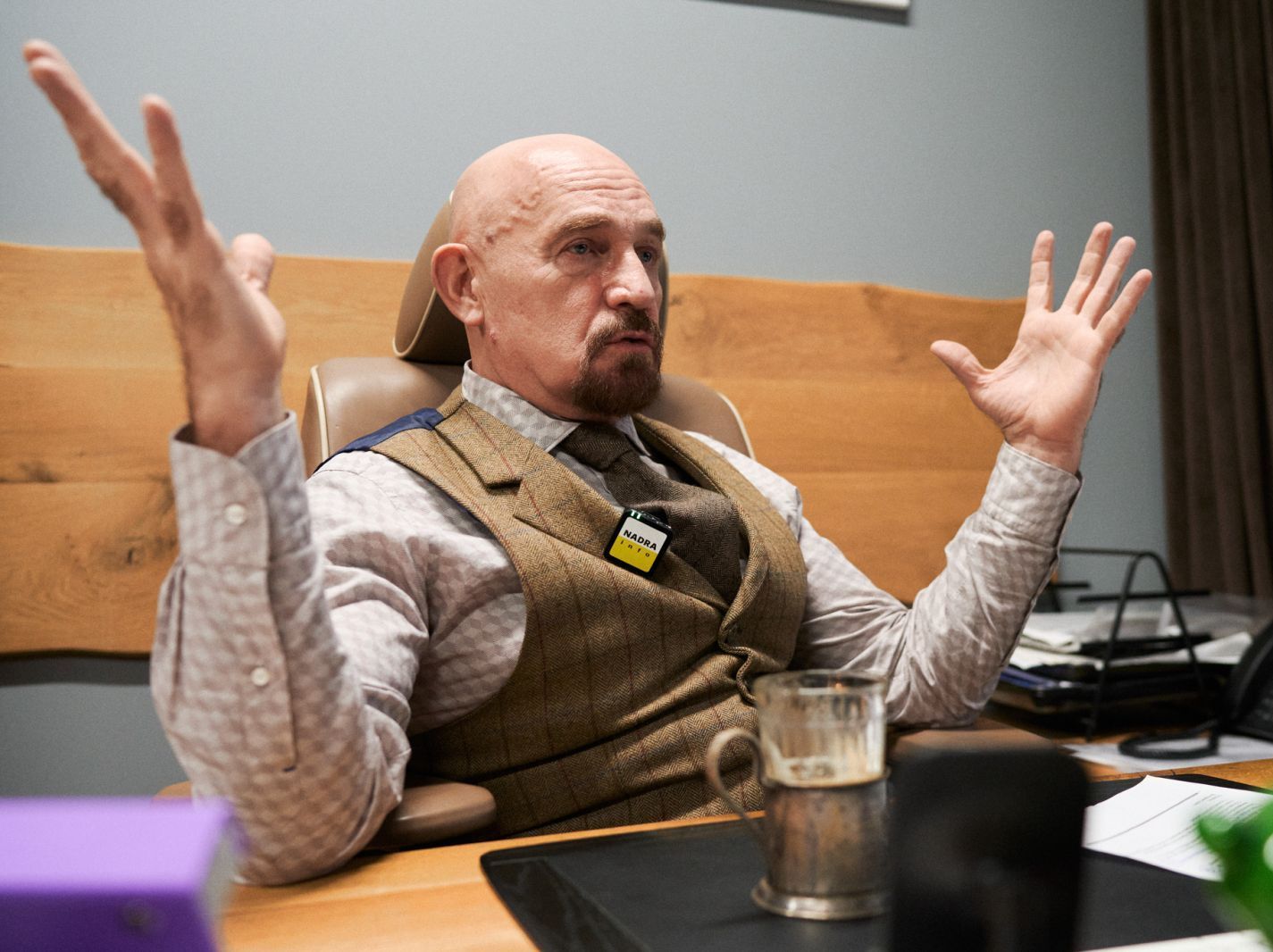 Oleksandr Syrota, CEO of OSK-TECHNOLOGY
The team, which grew from seven employees at the start to 250, expanded its production area from 270 to 25,000 m2, established its own design bureau, recovered after losing its business in Donetsk and temporary occupation in the Kharkiv region, supplies its own products and engineering solutions to the largest mining and processing enterprises in Ukraine, and has entered the European and Asian markets.
The founder and long-standing leader, who started out as a practicing maxillofacial surgeon in the turbulent 1990s, turned his beloved Harley Davidson into a world champion and considers sincerity to be one of the most important values of our time.
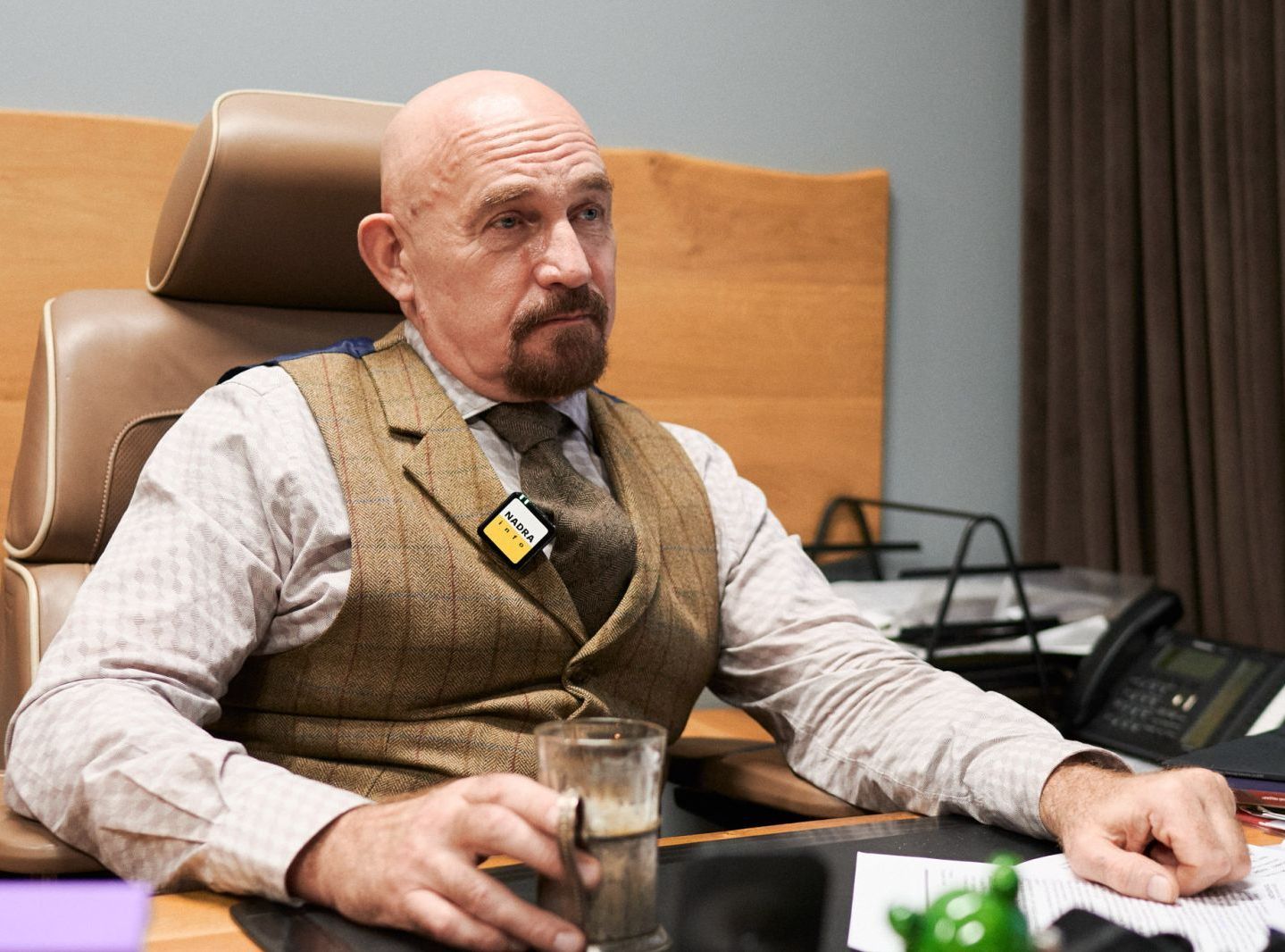
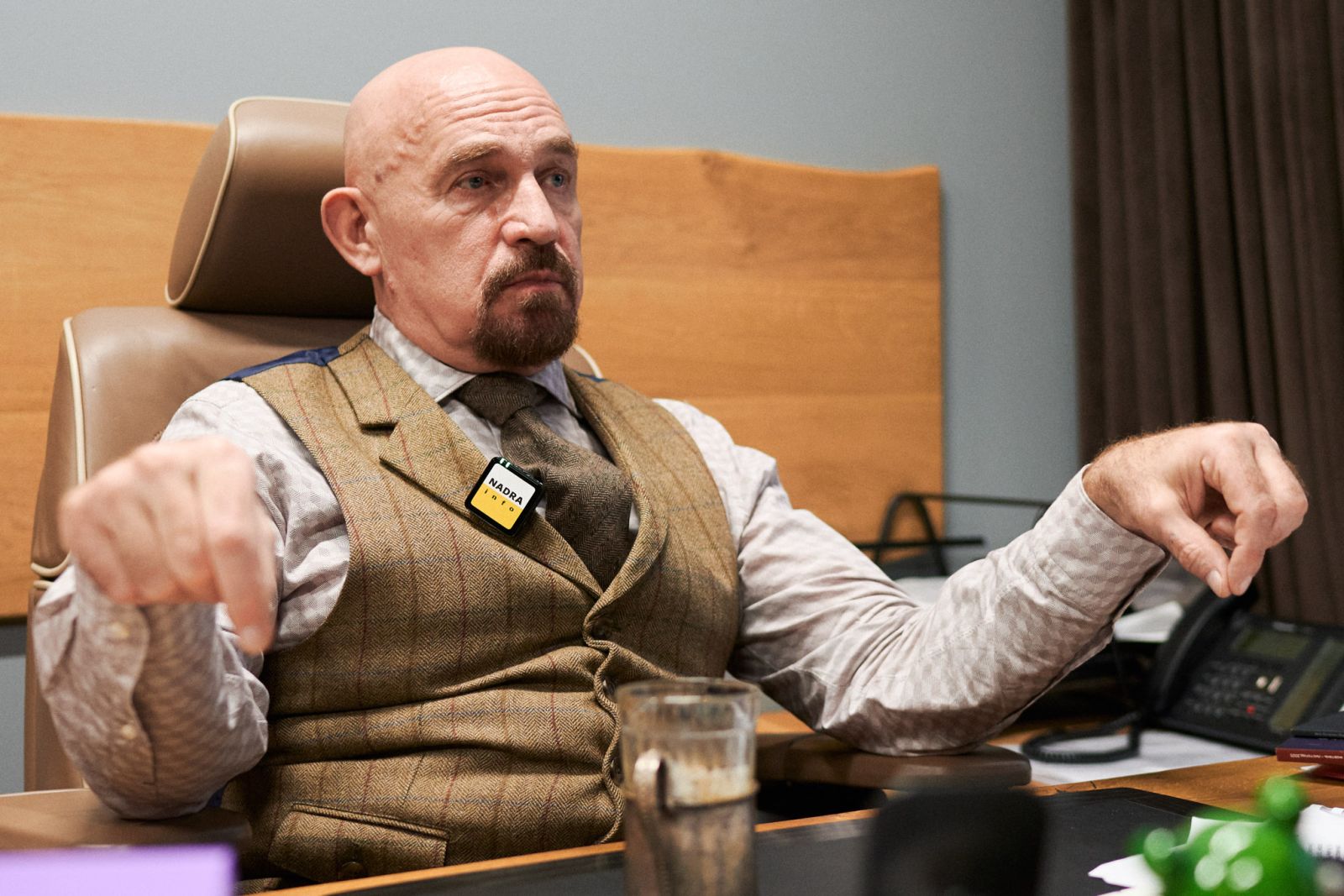
Read about the company and products of OSK-TECHNOLOGY, its path, and some of the rules of life of its CEO in the first major interview with Olexandr Syrota (pictured) for NADRA.INFO.
NADRA.INFO: Mr. Oleksandr, we met at United by Mining in September. And in October, I think I saw OSK-TECHNOLOGIES equipment at a salt mining facility in Zakarpattia...
Oleksandr Syrota:Yes, it was an event for the extractive industry, which, for some reason, was opened by the Prosecutor General...
As for the possibility of encountering our equipment, I can say without exaggeration that there is probably no operating mining and processing plant or mine in Ukraine that does not use OSK-TECHNOLOGY products.
In October, OSK-TECHNOLOGIES also participated in the Mining & Minerals Expo 2025 exhibition. What were your impressions and conclusions?
We were surprised. It turned out that we were almost the only mining equipment manufacturers there (although when we went to see the neighboring pavilion with special equipment, we came across our conveyor belt, used by a manufacturer of mobile concrete plants).
As for conclusions, today the domestic market has shrunk dramatically and continues to shrink before our very eyes. This somewhat sad factor is forcing us to accelerate our entry into foreign markets.
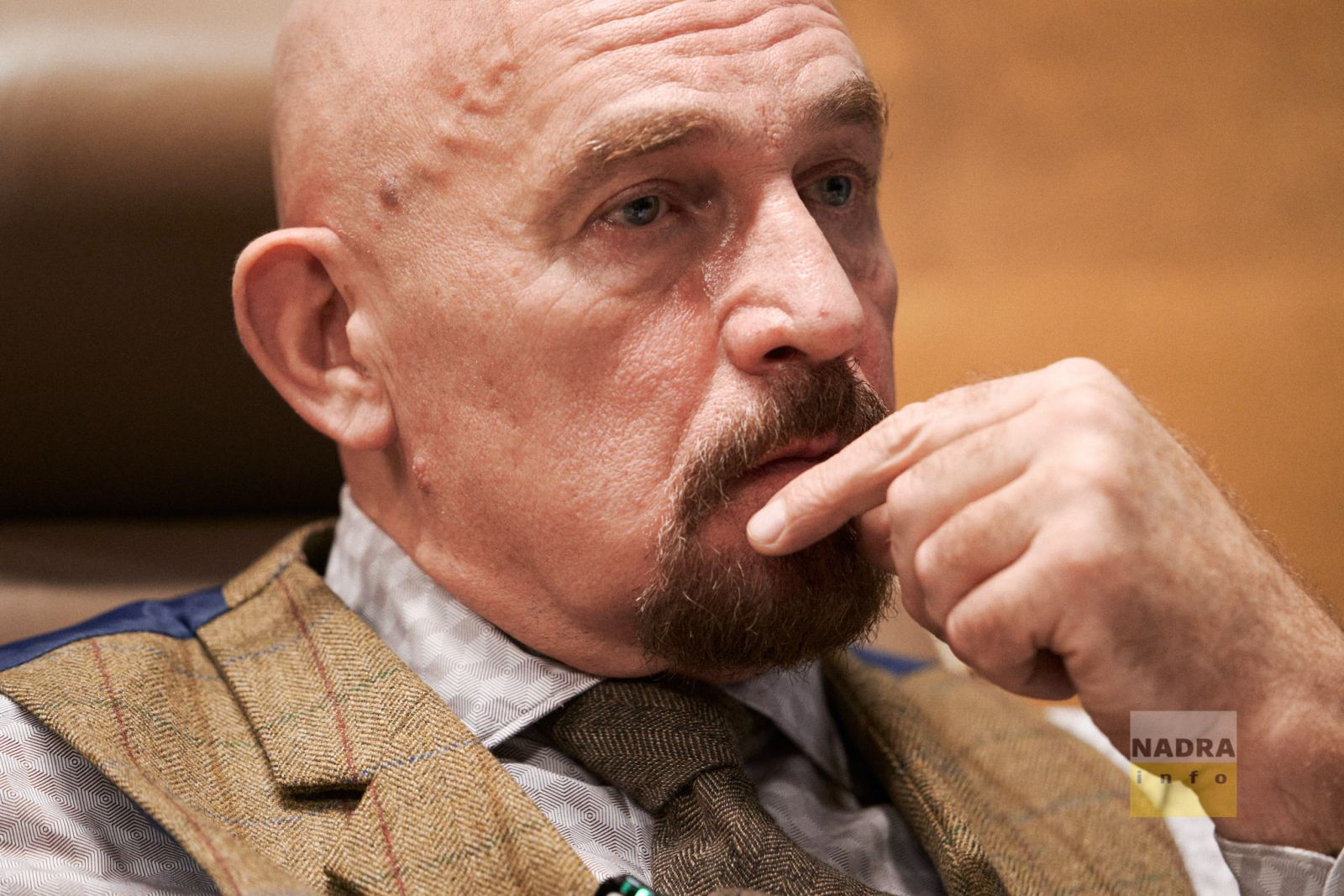
We are already adjusting our strategic development plans to take into account the fact that 70% of our products will be supplied to foreign markets, and we are already moving in this direction.
Perhaps we still lag behind our foreign competitors in terms of the modernity of the production equipment we use, but in everything else, I believe we are definitely not worse—on the contrary, we are more flexible, more responsive, and easier to work with.
What we lack is automation. But this shortcoming applies not only to the production of mining equipment, but also to any other equipment manufactured in Ukraine. We need to catch up here, and we have all the opportunities to do so: talented IT specialists and wonderful developments... However, they all go where there is not only money but also stability. Therefore, how to keep them in Ukraine is still a question.
And these are not the only challenges facing mining equipment manufacturers: it is necessary not only to retain people and pay them decent salaries, but also to be able to improve the culture of production, ensure occupational safety, build alternative energy sources, use whatever is available, but ultimately preserve what we have and grow. Because if you don't grow, you are on the road to the demise of production.
When it comes to safety at work, I remember 2020, when NADRA.INFO invited us to one of the coal mines in the Dnipropetrovsk region. The first thing that struck me was the safety requirements. We had to hand over all our gadgets and were not allowed to take smartphones or GoPro action cameras into the mine. We could only take photos with two unusual and not very convenient cameras that had passed the relevant certification. We were told that this was a safety requirement—methane emissions are possible in the mine, and if a device sparks, there will be an explosion. You manufacture equipment for mines—how do you deal with explosion protection?
A completely understandable and reasonable request! This means that in the very layer where you were, there is a high probability of a sudden methane release: imagine that there is a gas bubble somewhere in the depths, and suddenly the rock breaks, a crack appears somewhere—that's it, methane begins to be released, and any spark, even a small one, immediately causes an explosion. Therefore, the risks there are truly insane.
As for our equipment, for example, our explosion-proof electric motors are very competitive products on the market. In some tenders, we even beat Siemens motors, which are used in coal mining combines.
We have only been writing about subsoil use in Ukraine since 2019. Meanwhile, OSK-TECHNOLOGIES has been operating for over 20 years. Let us introduce you to our readers. Where are you from? Where did you study and work? How did you start your business?
I was born in Slovyansk (Donetsk region) in 1969, and lived there until 1986. Then I moved to Artemivsk (now Bakhmut) and studied at the DOSAAF driving school, from where I joined the Armed Forces of the Soviet Union – in the training unit, where sergeant command personnel were trained, and then I ended up in a separate reconnaissance battalion. After his service, in 1989, he enrolled in the Donetsk Medical Institute of the Ukrainian SSR, and in 1994, he graduated from the Donetsk Medical University of Independent Ukraine.
What is your medical specialty?
Maxillofacial surgeon. I worked in my specialty until 1998 at the Vishnevsky Hospital on Panfilova Street, in the Department of Craniofacial Surgery, together with Professor Eduard Nikolaevich Samar and Vasily Prokopovich Korobov.
Have you ever held a scalpel? Have you ever operated on patients?
Yes, but due to a lack of funds in medicine, I was forced to go work for a classmate who had started a retail business at the time. Then I slowly began to grow in my own direction. I opened my first business in Donetsk in 2003. On August 1, our company celebrated its 22nd anniversary.
I developed my business in Donetsk until 2014. When Russia invaded and the ATO began, I lost everything: my family and I left, leaving behind our house, apartments, and restaurants.
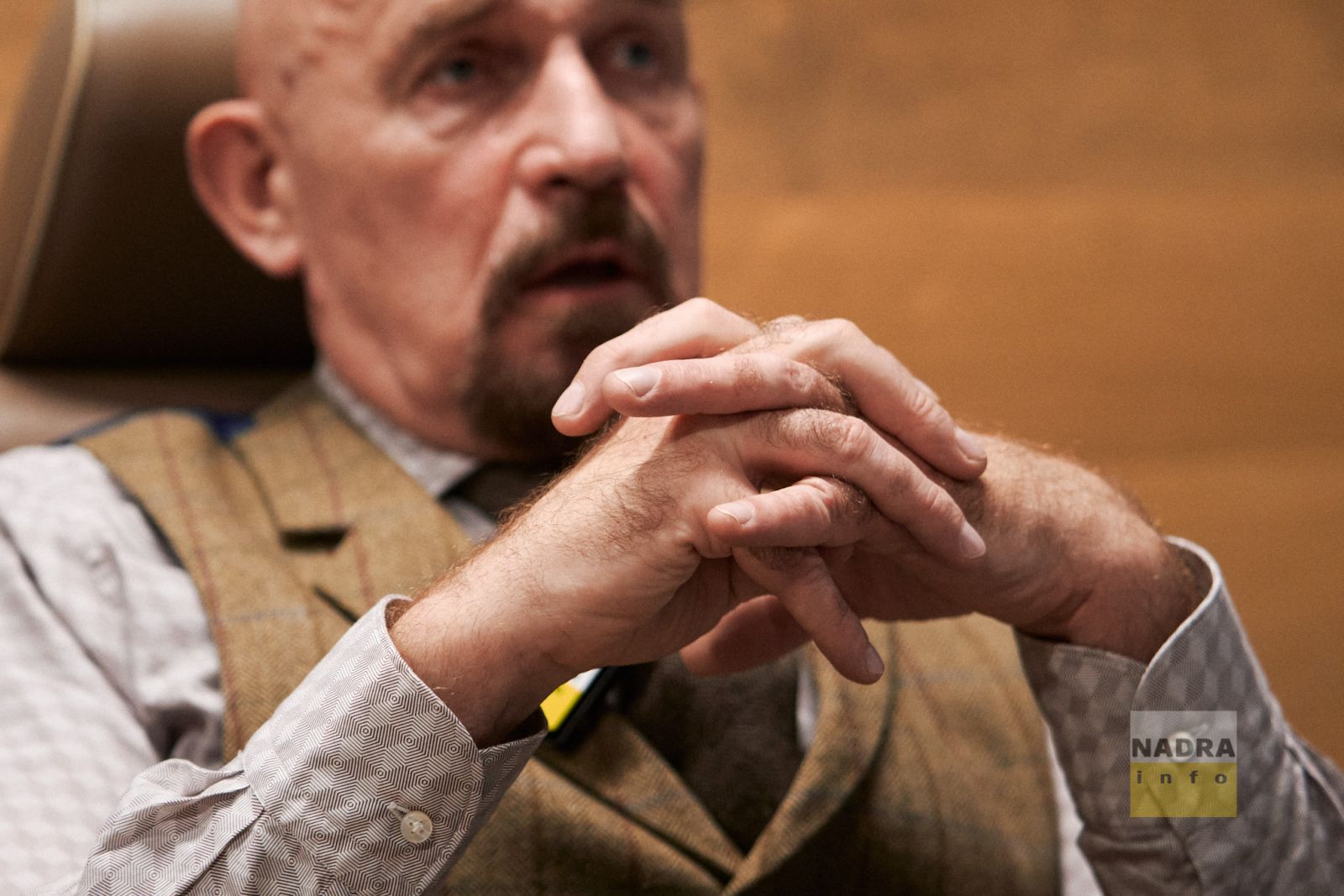
But it is not for nothing that our competitors say: Syrota is like a phoenix. We began to revive in 2015. First, we spent a long time looking for premises that would allow us to start the same production that we had in Donetsk. We needed about 2,000 m2. We considered two cities—Kharkiv and Dnipro.
Why these cities?
Firstly, these are large industrial cities. Secondly, logistics for our main customers from these cities was the most convenient. And thirdly, it was the availability of personnel that could be hired there.
The third point is very important. Because if you think about it, production can be opened anywhere. There is plenty of industrial space, someone will offer more attractive conditions, and the question will arise: where to find specialists. To have exactly the specialties you need: welders, fitters, millers, toolmakers, and all the others.
I think that, based on three criteria, Dnipro could beat Kharkiv?
This is a very controversial issue. I think Dnipro and Kharkiv are very similar in many ways, based on the reasons I have outlined. But only one company, HTZ (Kharkiv Tractor Plant), was once such a monster that it could overshadow the entire potential of Dnipro.
So, we chose this direction for the revival of production because HTZ slowly began to wind down its activities, and many specialists found themselves looking for work. Plus, the premises we found in Kharkiv were acceptable in terms of conditions.
In February 2015, we moved to Kharkiv, and in May, we delivered our first product to a customer.
The absence of bureaucratic decision-making procedures has always enabled us to move quickly toward our goals.
Still, tell us how you went from being a practicing surgeon (who obviously didn't get his education just for the sake of it) to the founder and head of a mining equipment manufacturing company? How did this transformation happen?
That's a difficult question! Yes, my medical education was not just for show. I really wanted to work as a surgeon; it was my life. So the transition was a long one.
First, I went to work for a classmate who was building a network of kiosks so he could feed his family. Then I had a child, and when you rent an apartment and the rent is your monthly salary, then... I tried to work part-time as a sanitary guard, but then I went into trade. At first, I was a night shift salesman at a kiosk, where I earned 3-4 times more than at the hospital. Besides, remember, it was 1997—when hospitals had nothing—no suture material, no plastic wrap, no normal painkillers (novocaine at best), not even gauze!
Despite all this, I remained a part-time surgeon for a long time in order to keep the opportunity to continue practicing medicine.
But when you dive into business, you take responsibility for one thing, then another... Quite quickly, I began to take care of supplies in my friend's kiosk business, forming an assortment depending on the geographical location of the points of sale: for kiosks on the routes miners took home after their shift, it was one set of products, and in the central part of the city, near kindergartens, it was another, for children and mothers. I went through all these moments as if I were learning marketing in the field. But it was interesting, I liked it, I began to delve deeper into trade, and realized that almost all the goods for the kiosks were brought from wholesalers in Poland. Then I started to transport the goods myself and distribute them among the points of sale.
But when there were too many stalls, I lost interest in continuing this business and immersed myself in another area related to security, namely car alarms (which were extremely popular at the time).
I opened the first car security center in Donetsk, and we began installing alarms and locks on gearboxes.
Later, I shifted my focus to bank security: we had a lot of orders from financial institutions, which were popping up like mushrooms after rain at the time, requiring video surveillance systems, security alarms, and safes! And when I looked at the safes that banks were ordering from abroad and asking us to install, I said that we could manufacture them ourselves.
That's how my first metal construction business started: I got a guillotine, a cutting machine, bought some metal, learned how to paint with powder paint, and we made our first safes! Later, we learned how to make safes up to protection class 5! We did everything ourselves; the only thing we bought was German Mauer locks.
In 2003, market conditions began to change, and I realized that I was not interested in working for someone else. Then I opened my own company, OSK-TECHNOLOGIES. It happened, you could say, by accident: the sellers of metal for safes said that they had a debtor who supplied pipes to a mine — either Donbas or Ukraine (I can't remember now) — and suggested that I consider taking over this business. I went there, took a look, and realized that it wasn't anything complicated for me. And so we started with mine drainage pipes: with a simple slipway that we welded right on the street and a 270-square-meter room.
The main thing over the years was to understand where we were going and what we needed to get there. Not only did I want to improve and grow myself, but I also wanted the employees I worked with to think and move in the same direction as me. And I wanted them to believe. You have to be the kind of leader who not only creates the conditions for work, but also inspires and motivates people to move in the right direction, realizing that our future lies there.
Today, we are 22 years old and operate on 25,000 square meters.
Your medical education is your first, but not your only one, right?
That's right. I also graduated from the Faculty of Economics and Law at Donetsk University and studied at the National Academy of Management.
Who did you look to for guidance when developing production from scratch in an industrial region?
It's not just an industrial region! It's a coal mining region (for example, 80% of my surgery patients were miners, and they were the biggest customers at the kiosks I developed), and miners are an incredible force that drives the entire economy of Donbas. That was the case then, and it is still the case now—everything is connected there.
Although, of course, if you delve into the region's economy, it would be wrong to say that it is only a mining region. In terms of the number of professions represented, there are more chemists and metallurgists there. Miners are in third place. But both metallurgists and chemists depend on miners. The extracted coal goes to the mining and processing plant, then to the metallurgists who produce metal, export it, and bring foreign currency earnings to the country. Or the coal goes to thermal power generation, without which no economy can function at all. Accordingly, this is the direction we moved in. The volumes were large, mines were opening new shafts, and the economic ties between the countries of the Soviet Union did not allow us to completely cover all the needs of coal mining in terms of equipment. And this led to the conclusion that we needed to develop in this direction.
Was there another company, perhaps a foreign one, that served as a model for you? Did you follow anyone's example?
No. We did it differently.
We looked at what we could master—and quickly mastered it. For example, we started with pipes for mine drainage: we purchased pipes, manufactured flanges and connections that made it possible to connect 6- to 12-meter sections of pipeline in 5 minutes (with our pipes, it was possible to build a kilometer-long pipeline in an hour). And that was just the beginning: the connections were first bolted, then flanged, then wedged. And we worked with different pipes – both ordinary painted ones and hot-dip galvanized ones (100, 112, 150).
After pipes, we mastered the critically important equipment of the valve group. Then we started manufacturing reduction units (with valves and gate valves for distributing liquids).
Next, we added fire hoses and hoses with firefighting inserts (with Bogdanov nuts for quick connection of fire hoses and firefighting) to our product range.
After that, we looked at what else we could master to set up production. What was in high demand? We saw demand for locks and arch fasteners, so we started looking at drawings and diving into the subject. We found the right presses, tried them out, tested them, and moved on.
That's right — step by step, we moved forward, expanding our product range (mostly stamped products) until we reached the machine-building sector. We started that somewhere around 2016.
The first step in this direction was the production of conveyor rollers. We got it up and running and moved on to the next level, the production of conveyors themselves. Then we realized that we needed to develop a production facility that would cover as many needs as possible for mines and beyond. One that could be constantly expanded, supplemented with individual areas united by the needs of industrial consumers. A production facility that would be deeply involved in the needs of the mining industry in general.
How many employees were on your team when you started in the mid-2000s?
In 2003, there were seven of us. At the peak of our production in Kharkiv, there were more than 300.
Today, there are 250.
After the full-scale invasion, did you relocate production to the West?
Yes, all production is in Kharkiv. Everything is working.
In 2022, we quickly found ourselves under temporary occupation and on the front line of combat – first, Orc tanks entered our territory – Ukrainian tanks drove them out, and then Ukrainian tanks were hit by Russian Grad rockets... As a result, we lost about 7,000 square meters of production capacity and all our computers (stolen by the occupiers).
But in 2022, we began to recover, and in 2023 – which no one believed would happen! – we not only fully recovered, but also built two new modern workshops: for the manufacture of pipes and for the production of conveyor transport.
Let me clarify, does OSK-TECHNOLOGIES manufacture pipes independently at its own facilities today? Or do you purchase them and adapt them to customer requirements?
That's right. But keep in mind: pipes come in different types. For example, we cannot manufacture what Interpipe produces. However, we do manufacture thick-walled pipes, for example, with non-standard diameters ranging from 820 mm to 1420 mm. We also manufacture pipes with diameters of 530-630 mm. We also manufacture 630 mm pipes. These have thick walls – 10 or 12 mm – which means that the manufacturing process is quite complex.
In general, the production of GOST pipes is an interesting and promising business. This is because our entire water supply and central heating system is worn out. And all of this needs to be replaced. We manufacture the pipes that are necessary for this, applying insulation, thermal insulation, and anti-corrosion protective layers to them.
At the beginning of our conversation, you said that there are no operating iron ore plants or mines in Ukraine that do not use your equipment, whether it be pipes, rollers, conveyors, fasteners, or other items. Who exactly is on the list of your largest customers?
In Ukraine, these are DTEK Energy and DTEK Networks, Metinvest enterprises, Poltava Mining, Dobropillya Mining, Myrnohradvuhillya, Lvivvuhillya, Eastern Mining, Marganetsky Mining, Kryvyi Rih Mining, Kation Invest, VKF Velta, Port TIS, Nikopol Ferroalloy Plant, OGHK (Irshansk Mining and Processing Plant and Vilnohirsk Mining and Metallurgical Plant), etc.
We are currently working on sales to Uzbekistan and Germany. We already supply products to Poland, Estonia, and Kazakhstan.
For example, we supply 1.65–1.85 m anchor bolts and mine arch support locks to Poland. Norway purchased our anchor bolts to reinforce slopes and tunnels.
By the way, this year we finally won a tender and got the opportunity to supply our conveyor rollers to the European market.
Was it difficult?
Entering the European market is incredibly difficult.
Firstly, no one is waiting for us there.
Secondly, they can always say, "Listen, you have such high risks there, you are in a war zone, so we will not work with you."
Thirdly, there is the issue of time. Let me put it this way: our European Mining Laboratory tested our rollers for six months! It doesn't matter how much it costs, but the approach itself involves six months of checks and tests!
The final test involved immersing the video in a large bath with an aggressive environment. It spun around in there for a day (it didn't just lie submerged, it actually spun), then they took it out, cut it open, and checked that there wasn't even any fogging inside — those are the requirements for Ukrainian manufacturers!
To enter the market of any country, you have to go through a series of stages: obtain a quality certificate, pass tests first in laboratories and then in field conditions – and only after all that will you be able to supply your products.
But we are calm about all these stages because we have our own laboratory, stands for testing electric motors, any automation, etc. The rollers are tested for wear, tightness, compliance with the roller assembly (roller – bearing), seals, everything.
We are probably one of the first companies in Ukraine to start exporting Ukrainian products specifically for the mining industry to European countries.
This is the first time I've heard a Ukrainian substitute for the word "bearing"...
Yes, in Ukrainian, "bearing" is "valnytsia." Back in the 1970s, they began combining technical documentation and using the words "bolt" and "bearing." Although in Ukrainian, "bolt" is "prohonytsia." Because it drives through, it goes with a thread. And "roller" is a very logical word, because it is the only thing that is mounted on a shaft, hence the name. And we are proud of our roller assemblies!
By the way, in 2021, we took our first steps into the agricultural business — we made our own disc harrow, a very interesting one, using our roller assemblies. And it proved itself incredibly reliable, but, unfortunately, a big war started and we closed this direction for ourselves.
How much have you invested in OSK-TECHNOLOGIES since the business was established?
I have no idea, I haven't counted.
If we're talking about the value of our business, I think it's around 150-200 million hryvnia today.
Is maintaining your own laboratory an expensive undertaking?
It is not an expensive pleasure if you understand what you need first and foremost.
Having your own modern laboratory is a prerequisite if you care about the quality of your products.
And the company must have a person who is familiar with all the equipment and knows how to use it correctly and in what order.
I can't help but ask about OSK-Technolodgy's revenue. Forbes wrote that in 2023, your company earned UAH 398.8 million. How much did you earn in 2024?
Indeed, in 2023, our revenue exceeded UAH 398 million.
I repeat, we were perhaps the only ones in our region who said in 2023 that we should not just work, but work at full capacity, in two shifts, and rebuild, improve, and expand.
That year, there was already a shortage of manufacturers, because some had left, some could not recover, and some had begun to relocate. And for those who remained, it was very difficult to recruit people.
Then these people will trust you, will work with you, and will understand what they are working for. They will see the future you are leading them to. They will not lose hope — on the contrary, they will come to work, enjoy life, and be able to return home and say to their loved ones: "Listen, everything will be fine in Ukraine! Everything will be incredible, everything will be great here!"
As for the results of 2024, our income was around UAH 391 million. This is our average annual revenue, so to speak.
People are the only resource for whom you must be so reliable and provide them with such confidence that they feel better at work than at home.
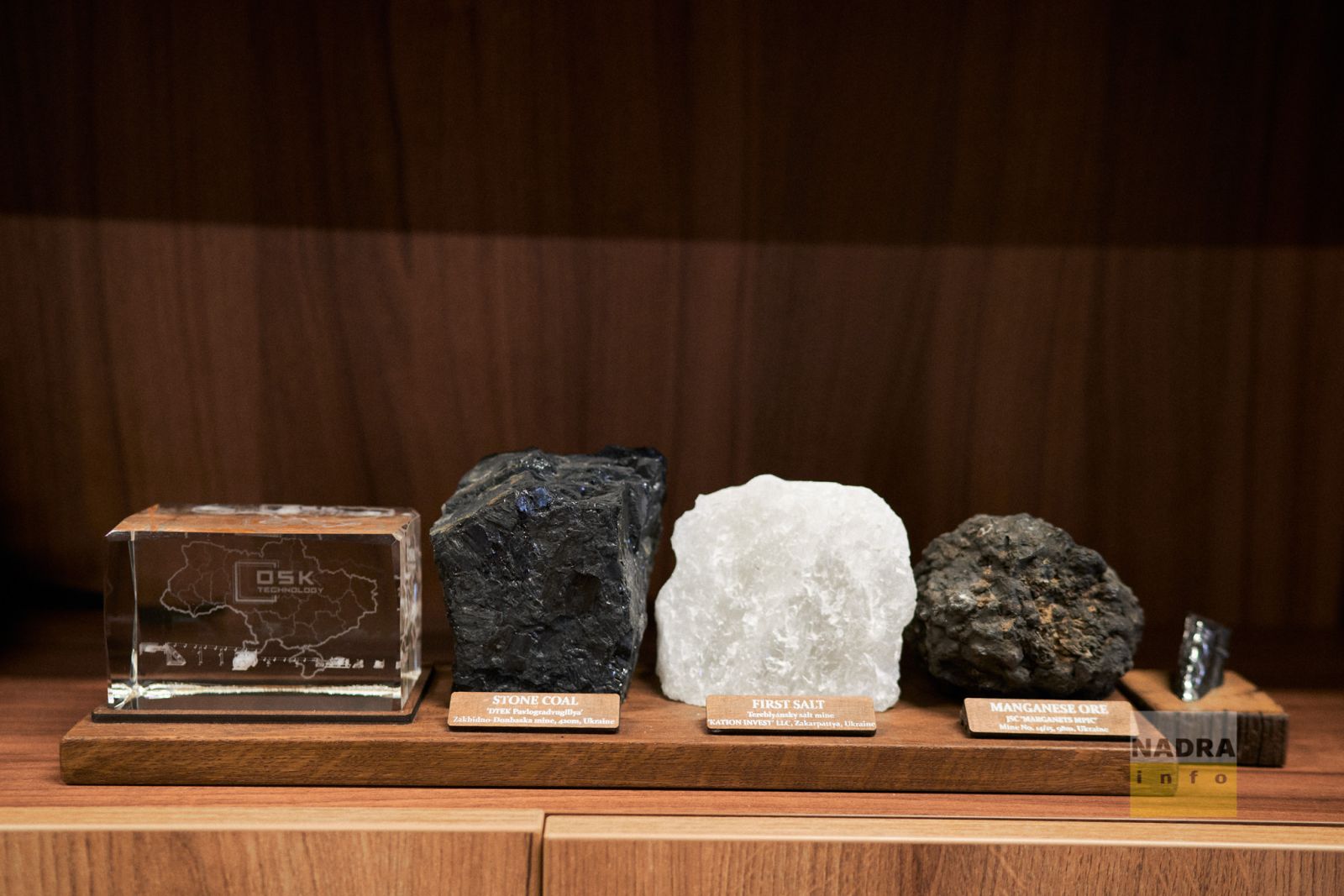
You mentioned the company Kation Invest, which is building the first new mine in independent Ukraine – in the Zakarpattia region, at the Tereblya rock salt deposit. In October, I had the opportunity to visit Kation's industrial site, where I saw with my own eyes the conveyor and rollers that were being prepared for installation to resume production. Were those your rollers? What can you say about this project in general? How did you get involved in it? Did you have any competitors?
Yes, they use our conveyor to lift salt from the mine to the surface.
Of course, Kation had offers from other conveyor equipment suppliers, but they knew us very well and trusted us. The saying proved true: first you work for your name, and then your name works for you. That's what happened here: the team at Artemsil, having left occupied Bakhmut, moved almost entirely to Kation Invest — engineers, technologists — and they recommended us to the owners. They contacted us, we made a tender offer, and of all the offers, ours was the best — so we started working together. That's all.
As far as I know, the subsoil user also received an offer from a German company, which, if I am not mistaken, consisted of supplying Caterpillar conveyor transport. But our offer was more interesting, I think, because we are guided not only by technological solutions, but also by the strategic prospects for the project's development.
What do you mean?
Indeed, it would seem – where are we, and where is strategic development? But look, they are 6 kilometers from the railway station, to which salt will have to be transported. I tell them: "On the roads that exist (or even if you build new ones), the villagers will not let your trucks with salt pass. Firstly, dump trucks are noisy, and secondly, they emit a lot of exhaust fumes. And thirdly, when the villagers' houses start to crack, they will simply curse you and block the road!"
As an alternative, Kation considered its own railway branch...
Yes, we did consider it. But again, I tell them, look, you will lay the rails at your own expense, but you will have to hand it all over to Ukrzaliznytsia, and you will not have your own locomotive—at best, only carriages. And that will cost, let's say, $1 million per kilometer.
We proposed to build an overhead conveyor that would not interfere with anyone. Even agricultural machinery will be able to pass freely under it, because we immediately included a height of 10 meters in the project. We have even chosen the direction in which it will run, provided for easy maintenance, and said that the main thing is that we have the opportunity to bring it all to life: "You will immediately be able to deliver supplies from the mine to the loading platform at the railway station. And there you can load railcars with any volume – without downtime, without unnecessary costs. Once the station platform is loaded, the conveyor is turned off, and the salt is stored on the platform near the mine. If more salt is needed at the station, the conveyor is turned on, and the salt is transported. Everything is quiet, with no emissions and no harm to the environment!"
Did Cation accept your offer? Did you shake hands?
We even prepared the project documentation. If I am not mistaken, they even paid us for it or made an advance payment.
We still have all the work and expertise, the supply topography, and the route for this conveyor on the ground.
Therefore, I hope that the conflict between the co-owners will soon be resolved, we will be able to work calmly, and we will quickly implement this ambitious project.
In my opinion, our steep-angle conveyors are the best alternative to road transport for hauling rock from the quarry to the surface.
And we will monitor and tell our readers about the implementation—it seems that this has not been done in Ukraine before. What about your inclined conveyors—KNC? Are they one of the "features" of OSK-TECHNOLOGIES today?
The CNC for the extractive industry is the transport of the future, and for us, it is a continuation of our development story, our next stage.
We are now ready to build such a conveyor belt and are working closely with our engineers and designers.
We have researched all foreign developments related to KNC, we have our own, and if it weren't for the full-scale invasion, we would have already built one for an iron ore miner in Kryvyi Rih (we were in negotiations in December 2021, but the Russian Federation's attack ruined everything).
Without a conveyor, how do most quarries operate today? Roads, dump trucks, time... With a conveyor, you put the ore into a crusher, from the crusher into a bunker, from the bunker onto the conveyor, and up it goes. The deeper the quarry, the more beneficial such a conveyor is.
What were the ore transportation volumes for the Kryvyi Rih company?
One million tons per month.
It is not difficult to calculate how many vehicles, trips, fuel, service costs, and driver salaries would be needed to transport such a volume of ore.
When you start calculating the economics in the long term, you realize that CNC is not just more profitable — you wonder how you ever managed without it before! Because instead of 50 cars, you will only need 2-3 that will run in the quarry. The conveyor belt will do all the rest of the work.
It seems to be the only enterprise in Ukraine where I have seen with my own eyes a conveyor belt for transporting rock from a quarry – the Vyrovsky quarry, which extracts granite in the west of the Rivne region and is part of the German group Basalt AG.
Were other mining companies interested in CCN technology besides the subsoil user from Kryvyi Rih that you mentioned? How do you assess the prospects of this technology for the Ukrainian market?
Currently, I see great prospects for CCM in Ukraine, but for this to happen, production must be restored to at least pre-war levels, the GOK must be loaded, and the issue of maritime logistics must be resolved. Today, the industry is effectively standing on the brink of all the risks of war.
Therefore, as soon as confidence in the future returns, a boom awaits the high-angle conveyors belt industry in Ukraine.
I think that in Ukraine alone, the market capacity for KNC over the next 10 years will be at least $1 billion annually. I am talking about a comprehensive assessment with the possibility of implementing such turnkey projects — not only extracting ore from the quarry, but also transporting it to the mining and processing plant by a direct conveyor belt, at a distance of up to 47 km (we have calculated this possibility)!
How many specialists work in the OSK-TECHNOLOGIES design bureau? How did you come to create this division?
Without a design bureau, it is impossible to develop production!
We came to this conclusion when we started manufacturing locks for arch fasteners. More precisely, our own molds for locks.
First, we built our own smelter, where we melt metal scraps into new blanks, which we then send for hot stamping. This requires a mold in which the blank will not melt after impact but will retain the desired configuration. It must be made of tool steel, which is difficult to process. Of course, there are companies that make molds, but this motivated us to scale up, develop our own drawings, and manufacture molds ourselves. So we built a separate tool and metalworking shop and made our lives easier—we saved up to 10% on a single lock thanks to a properly manufactured mold.
We founded the design bureau back in Donetsk. At that time, it had two engineers, and today it has 20, each with their own specialization: some are in charge of conveyors, others—drums, reducers, stations, trolleys, elevators, elevated roads, monorail roads, etc.
This is our vision, and all our employees understand it — and we try to choose the best. We started a mentoring institute and built a dormitory (a nice one, with three people per room, a kitchen, and a dining room). One mentor (for example, a turner or milling machine operator) can teach up to three people, who have the opportunity to come, live, study, and subsequently find employment. This is very important. This is what our state should be doing. But it is not doing this, so business is doing it instead.
What is the largest project that OSK-TECHNOLOGIES has implemented for underground mining? And what can you say about the prospects for coal mines in the Lviv and Volyn regions?
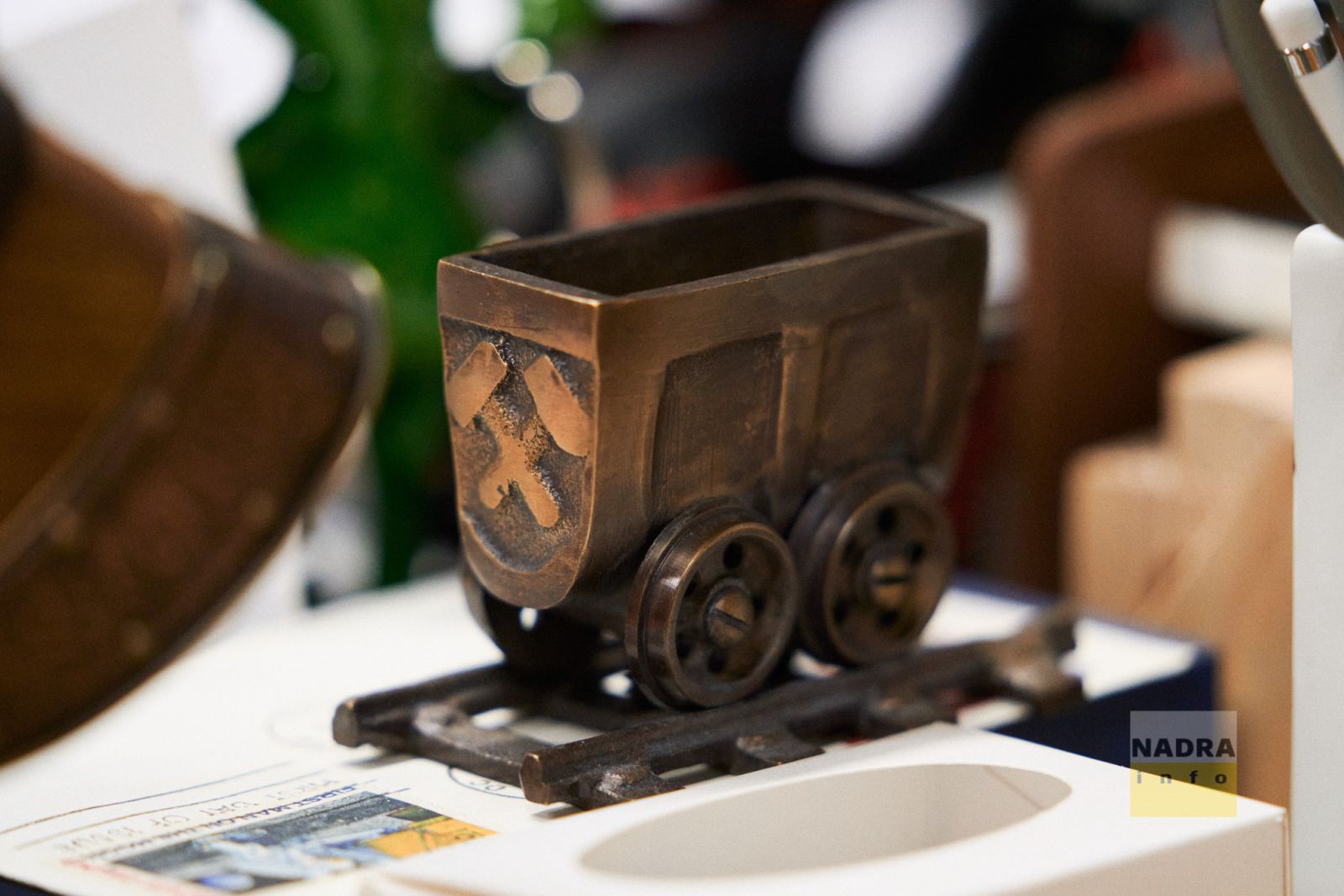
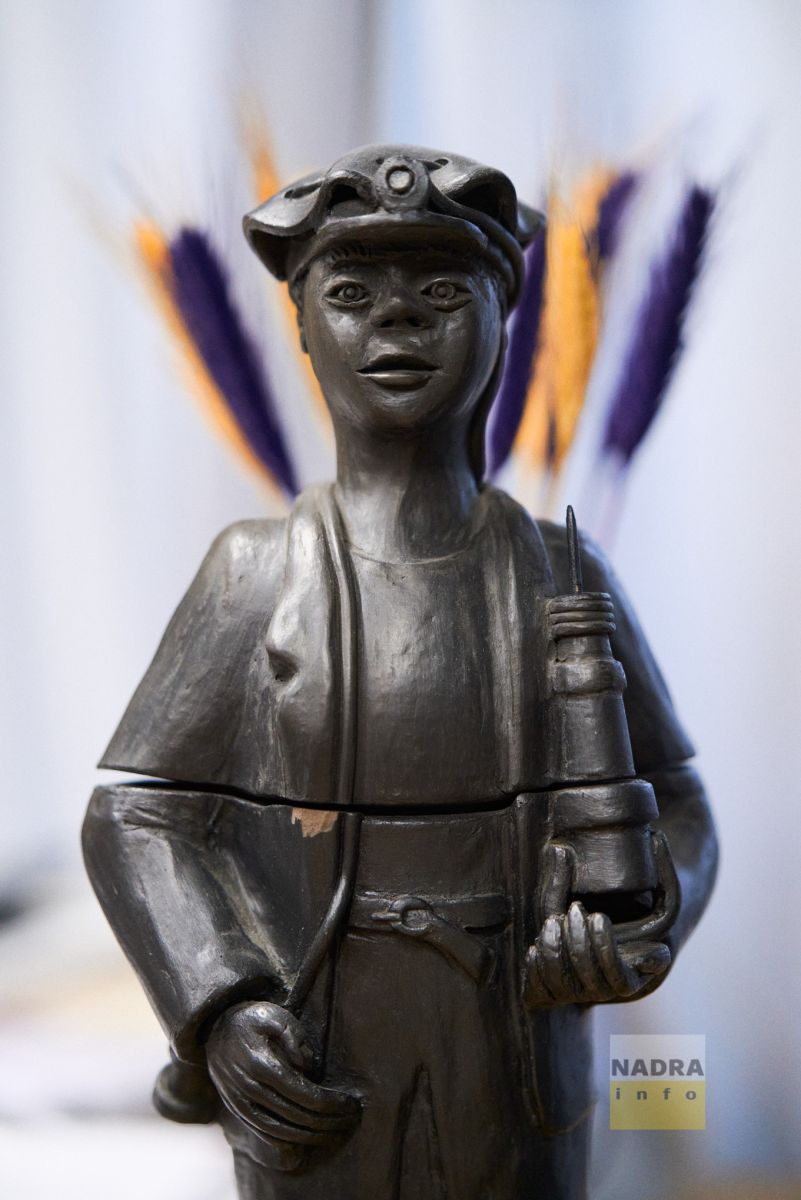
The Lviv region has great potential. Incidentally, this miner (a gift from the Lviv region) is made from a single piece of coal mined by the state-owned company Lvivvuhillya:
I believe that Lvivvuhillya has great prospects because it supplies coal to state-owned thermal power plants. As for Volynvuhillya, the seams there are very thin. And to develop them, you need to build drill-and-blast combines. Firstly, no one manufactures such combines in Ukraine, and secondly, the cost of a tonne brought to the surface would be unjustified. Moreover, there is enough coal mined by Pavlohrad and Lvivvuhillya, so I see no prospects in Volyn.
If we talk about the largest underground project we have implemented, it is a belt conveyor for Metinvest: a continuous 1,100 m conveyor. We can make a similar one for transporting rock up to 7 km.
If you want to make high-quality products and master new complex designs, your engineers and designers need to be on the same page. And they need to be supported by economists who will do all the calculations so that you immediately understand how much everything will cost, what you can do yourself, and what you need to purchase. That is why a design bureau is a vital necessity.
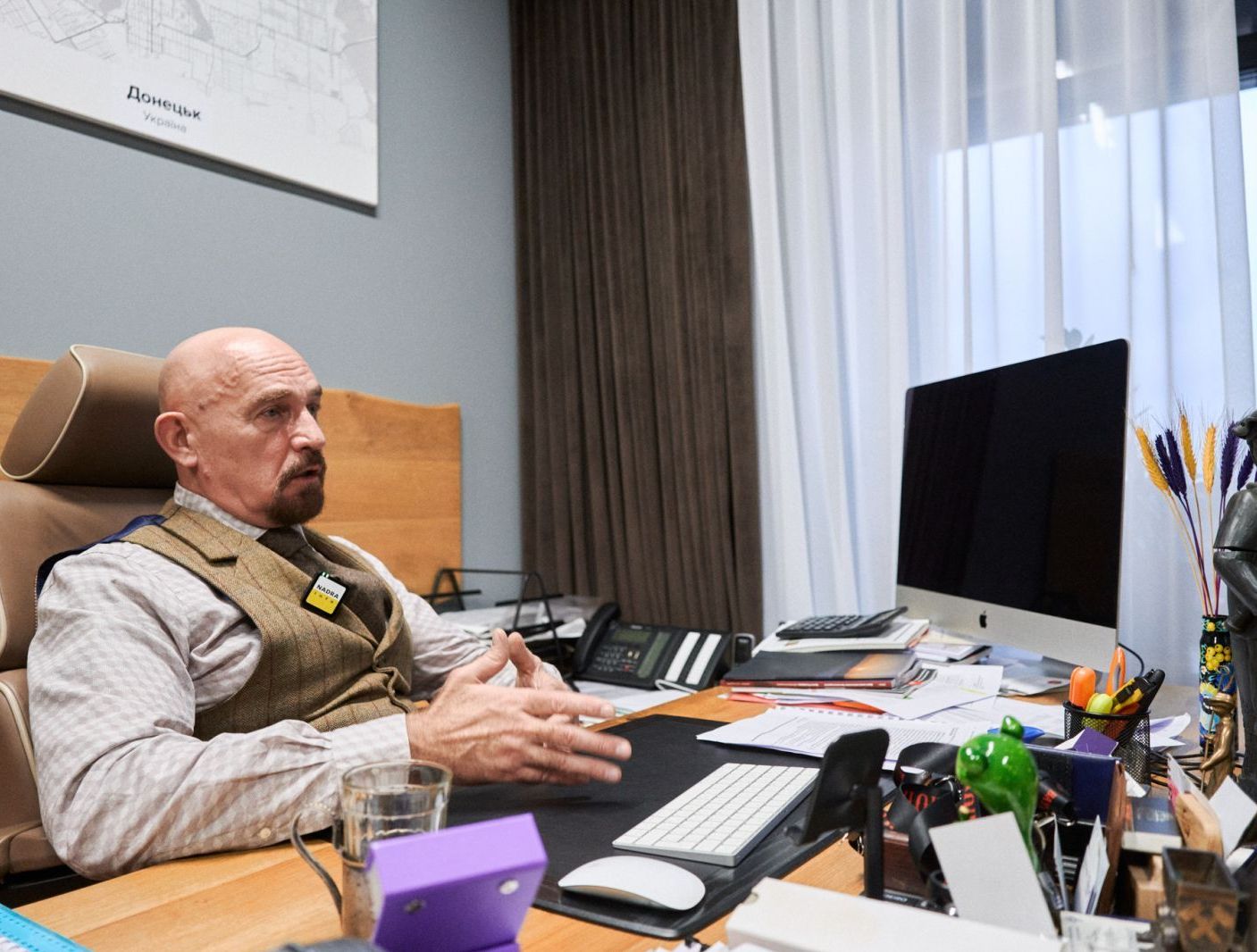
Behind you on the wall is a map of Donetsk. What is marked on it?
The building in the city center where our apartment was located.
I also had my own house and three restaurants in Donetsk. The apartment was nationalized, and I donated the house to an orphanage.
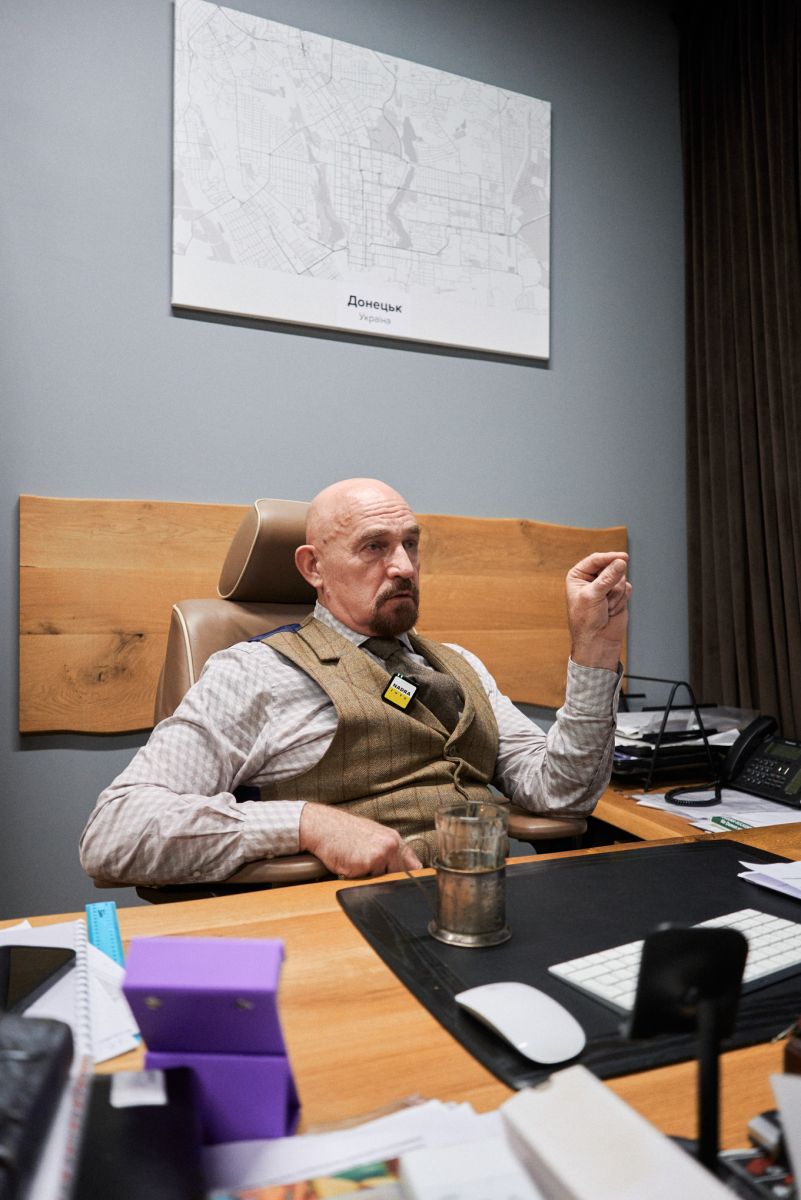
And where is Donbass Arena?
Right here, above.
Donetsk remains a mystery to me. I have only been there once, in 2010, on the first Lviv-Donetsk-Lviv flight, which was launched ahead of Euro 2012. I remember the city for its thousands of roses, clean streets, and Donbass Arena. But of course, that was only the central part, beyond which we were not taken...
The city authorities took care of cleanliness and order, monitored the city's appearance daily, it was a beautiful city!
When you get a call, you don't hear a melody, but a sound... similar to the sound of a V-shaped engine — that's the sound of a motorcycle, right?
Yes.
The sound of your motorcycle?
Mine sound different.
I have two: a Honda Goldwing and a Harley Davidson Softail.
The Harley Davidson is a custom bike, a SteamPunk-style sidecar. It is a two-time European champion and came second in the World Custom Bike Championship in America.
The project took almost three years to design and build.
/Oleksandr-Syrota-_-OSKT-_-Nadra_Info_.jpg)
/Oleksandr-Syrota-_-OSKT-_-Nadra_Info_-2.jpg)
Wow!!!…
Every detail in the motorcycle's design (even the inclined throttle gears) was calculated and brought to life in such a way that anyone who saw it would say, "Wow!"
This is a 1999 model, but nothing remains of the original. In addition, this is the last carburetor Harley Davidson—I wanted a carburetor so that it would sound right.
And the Goldwing (Honda Goldwing) is for long-distance travel.
Did many people stock up before the war?
It used to be 15 thousand per season!
Is the Baystryuki biker club a significant part of your life?
Incredible!
Baistryuki was founded two years ago. Before that, we were in another club. But that club had Russian roots, and when the founders told us that they were "apolitical," we left. And we started our own. By the way, we also have our own military unit, "Bastryuki," with which we have gone through a difficult but also incredible journey.
The biker movement encourages you to be open, very sincere, intolerant of lies and injustice. This is important.
Did you design the Baistryky emblem yourself, also from scratch?
Yes, I made the model myself from scratch. Later, the logo was made from iron right at our factory.
I've been riding motorcycles since I was 13. I remember how we rode the Kasik (K-750) and MT-10; how I greased my first starter from Zaporozhets on the Kasik; how the first Japanese Honda bikes came to Ukraine — and we saw that there were better motorcycles than Jawa and Chizet!
In the biker community, by and large, no one knows who you are, what your status is, or how much money you have. You arrive, meet up, go to a motorcycle festival or other events together, and just hang out. And you are judged not by the cost of your clothes and accessories, but by how you behave and how you treat others.
/Oleksandr-Syrota-_-OSKT-_-Nadra_Info-_-by-V_Kuzan-11.jpg)
Today, sincerity is perhaps the greatest deficit in our lives. It is what we lack. Sincerity itself. Because most people try, at best, to remain silent, and at worst, to say what others want to hear. And it ruins your life if you surround yourself with such people: when you are wrong, no one will tell you that you are wrong. If you behave like a jerk, no one will tell you that you are behaving like a jerk — and this ultimately leads to certain problems. But when a person is sincere and does everything sincerely, for example, helps the military not for the sake of a Facebook post, but because they genuinely care, helps and does everything for victory — then there will be victory.
Finally, I would like to ask for some advice for readers. You have a lot of business literature on your bookshelf. What would you recommend reading for aspiring entrepreneurs or CEOs?
First and foremost, I recommend reading books on management. For example, The Golden Circle (by Simon Sinek – Ed.) – study it, memorize it, and use it as a guide in any situation. These are the foundations, the ground on which you rebuild yourself as a leader again and again.
I also definitely recommend Who. How to Hire the Best (by Jeff Smart and Randy Street – Ed.) – it is simply indispensable. At first, you do business based on inspiration, and then you realize that inspiration must be transformed into stability. And here, the most important thing is the people who will be with you until the end.
Author Vladimir Boiko, ІА NADRA.INFO
Photo: Valentin Kuzan